

Clear pricing for your property
Choose the assessment scope for your property. Larger or more complex water systems require a bespoke quotation.
Built around your water system
Landlords and letting agents
Practical assessment of water systems in rental homes, including vacant properties and little-used outlets.
Businesses and workplaces
Offices, retail premises and other workplaces, with scope based on system layout, use and exposure.
Larger and complex premises
Hotels, gyms, schools, care settings and managed blocks with storage, multiple outlets or vulnerable users.
Property and facilities managers
Clear findings to help teams plan controls, maintenance, monitoring and record keeping.
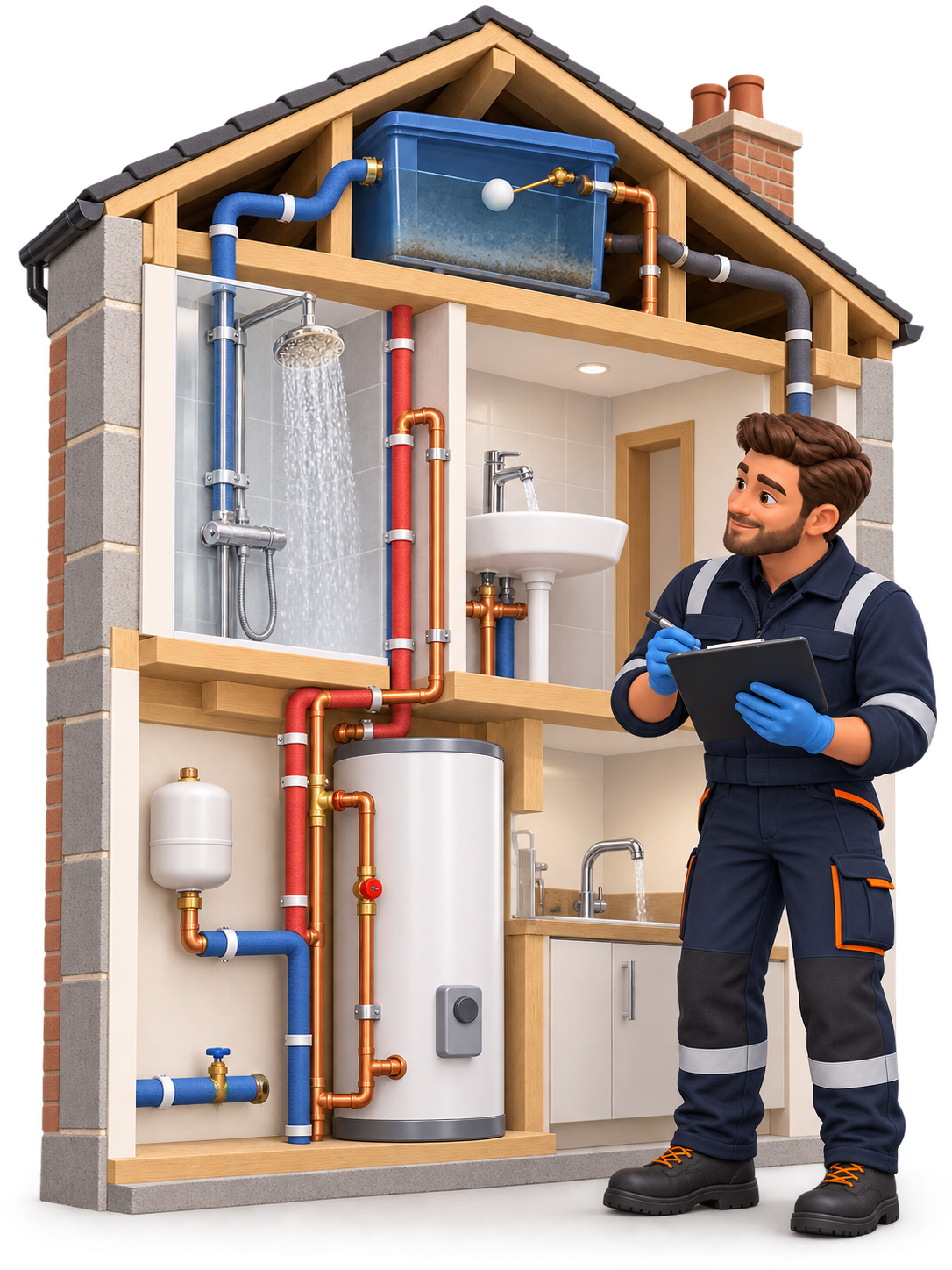
A closer look at your water safety
The assessment considers the system’s design, use and condition, alongside the people who use it and existing controls.
Hot and cold water systems
Review relevant tanks, cylinders, pipework, outlets and showers within the agreed scope.
Temperature and stagnation
Consider temperature control, water turnover, little-used outlets, dead legs and excessive storage.
System condition
Look at scale, deposits, maintenance and other conditions that may encourage bacterial growth.
People and exposure
Consider how water droplets may expose occupants, including people who are more vulnerable to infection.
Controls and records
Review relevant flushing, temperature monitoring and maintenance records to assess how controls are working.
Your findings. Your controls. Your next steps.
Receive a documented assessment covering the water system, hazards, people at risk and existing control measures.
The report explains findings, inspection limitations and recommended actions. Depending on scope, it may include photographs and temperature observations.
What your report covers
- Premises and water-system information
- Hazards, people at risk and existing controls
- Inspection scope and any limitations
- Recommended actions and priorities
Proportionate. Practical. Clear.
- Assessment matched to the water system and its use.
- Clear findings with practical control measures.
- Testing and remedial work considered according to risk.
From enquiry to action
Tell us about the property
Share the building type, occupancy, water-heating arrangements, known storage and existing records.
Water-system assessment
Review the agreed components, temperatures, stagnation risks and people who may be exposed.
Evaluate existing controls
Consider system condition, maintenance and monitoring to identify where improvements are needed.
Report and recommendations
Receive a documented record with clear limitations and practical actions for managing the risks.
When should you review your assessment?
Keep the assessment current. Review needs depend on the system and its risks, with changes or failed controls prompting a fresh look.
- Alterations to the water system
- Significant changes in occupancy or use
- Long vacancies or reduced water use
- Failed controls or concerns about infection

Different properties. Different controls.
Rental homes and vacant properties
Simple domestic systems may need straightforward controls. Vacancies and little-used outlets deserve attention because water can remain stagnant.
- Consider flushing before letting or reoccupation
- Review storage, redundant pipework and low-use outlets
- Give tenants clear guidance on reporting water-heating problems
Commercial and managed buildings
Stored water, recirculation, long pipe runs and many outlets can require a more detailed approach to ongoing water management.
- Define responsibilities and monitoring arrangements
- Review temperature checks, flushing and maintenance records
- Plan corrective action where controls are ineffective
Plan responsibilities and follow-up
Agree who will manage maintenance, monitoring, water hygiene and corrective actions. Where agents or contractors are involved, responsibilities should be clear.
Match the control programme to the actual system. Record relevant checks and review arrangements when use, occupancy or system conditions change.
Choose for competence and clarity
Compare relevant water-system experience, assessment scope, reporting quality and how inspection limitations are explained.
FRA Expert focuses on proportionate assessment, clear reporting and recommendations that landlords and facilities teams can manage.
Book your London Legionella assessment
Discuss your property, water-system complexity and required scope with FRA Expert to arrange an assessment.
Frequently Asked
Questions
What does a Legionella risk assessment cover?
It reviews the water-system layout, storage, temperatures, stagnation, outlets, users and existing controls within the agreed scope. The report records findings, limitations and recommended actions.
What will I receive after the assessment?
A documented assessment record covering the premises, system information, hazards, people at risk, controls and recommended actions. Photographs and temperature observations may be included depending on the scope.
When should the assessment be reviewed?
There is no universal one- or two-year expiry. Keep it under regular review, especially after system changes, altered use, long vacancies or failures in existing controls.
Is water testing the same as a risk assessment?
No. An assessment reviews the system and conditions that can allow bacteria to grow or spread. Testing examines a sample at a particular place and time and may be recommended where risks or control performance justify it.
What happens if a risk is found?
Actions should match the cause and level of risk. Recommendations may address temperature control, water turnover, redundant pipework, outlet cleaning, repairs or monitoring. Finding a risk does not automatically mean the whole system needs replacement.
What should I compare when choosing an assessor?
Compare competence, experience with similar systems, assessment scope, reporting quality and the practicality of recommendations. Check that limitations and any uninspected areas are clearly explained.