

Technical survey pricing
Portfolio and site rates for London properties. Tell us the number of doors, building type and access arrangements to confirm your scope.
Built around your property
Businesses & workplaces
Fire doors in offices, shops, schools, hotels and care settings, with records for your facilities team.
HMOs & shared homes
Doors protecting shared corridors, stairs and escape routes, assessed in the context of the building.
Blocks & mixed-use buildings
Flat entrance and communal doors, with clear locations and findings for each inspected doorset.
Owners & managing agents
Consistent inspection records to help landlords, housing associations and property teams plan maintenance.
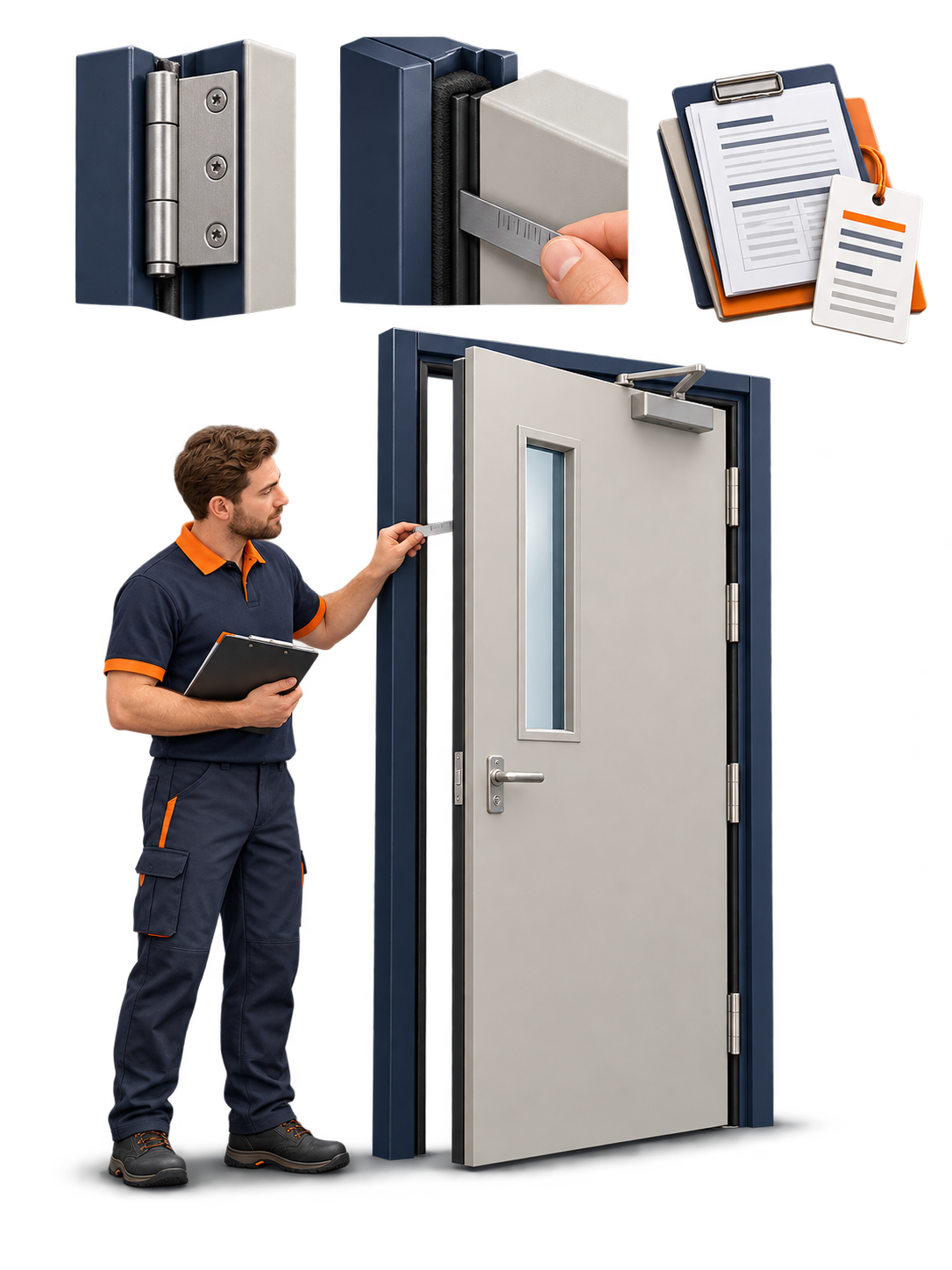
A closer look at your fire doors
A fire door depends on the complete doorset. Our inspection reviews its condition, operation and available supporting evidence.
Door leaf & frame
Visible damage, warping, holes and alterations, plus how the door sits and moves within its frame.
Gaps & alignment
Head, side and threshold gaps considered against relevant guidance and available doorset information.
Hinges & closing action
Secure hinges, suitable hardware and a closer that brings the door fully into its frame without obstruction.
Seals, glazing & fittings
The condition of seals where required, vision panels, handles, latches and other openings affecting performance.
Labels & product evidence
Available labels, manufacturer details and supporting records. Missing historic certification alone does not establish that a door is unfit.
Your doors. Your findings. Your next steps.
Your inspection record identifies each door and its condition on the visit date, with clear findings and any actions required.
Use it to brief contractors, prioritise repairs and maintain a useful record. Paperwork supports ongoing maintenance; it does not replace it.
What your documentation covers
- Door location and inspection date
- Condition, components and available evidence
- Defects and prioritised remedial actions
- A record for follow-up and ongoing maintenance
Door-specific. Practical. Clear.
- Findings linked to the door and its building context.
- Clear distinctions between inspection, installation and test evidence.
- Practical recommendations for property managers and contractors.
From enquiry to action
Confirm the scope
Share door locations, property use, existing records and access arrangements.
Inspect each door
Review condition, gaps, seals, hardware, self-closing action and available evidence.
Record & prioritise
Document defects clearly and identify the remedial actions to address first.
Provide documentation
Receive inspection records and clear next steps, including any work needed before further sign-off.
When should you arrange a check?
Set your inspection schedule around the building’s duties, fire risk assessment, door use and condition. Act promptly when faults appear.
- Doors that do not close fully
- Damaged leaves, frames, seals or glazing
- New installations, replacements or alterations
- A scheduled review or missing inspection records
Different records. Different purposes.
Existing fire door inspections
An inspection records the condition of the actual door in your building. It helps identify defects and the evidence or repairs still needed.
- Condition and operation on the inspection date
- Available rating, labels and supporting documents
- Repairs and evidence needed to resolve defects
New & replacement doors
Installation records identify the doorset and support handover. Product test evidence relates to a tested design and is different from an on-site inspection.
- Doorset, location, installer and completion details
- Specified performance and installed components
- Handover records, including Regulation 38 information where applicable
Know your responsibilities
Fire doors must be maintained as part of the building’s fire safety arrangements. The Responsible Person should organise suitable checks and act on identified defects.
For blocks of flats in England with a top storey above 11 metres, check communal fire doors at least every three months. Use best endeavours to check flat entrance doors at least every 12 months.
Choose for competence and clarity
Ask about inspection scope, competence, the records provided and how defects will be prioritised. Confirm whether you need routine checks, a detailed inspection or installation evidence.
Keep inspection findings, product information and maintenance records together. Read the government’s fire door guidance.
Book your London
fire door inspection
Need clear records for your fire doors? Contact FRA Expert to discuss your property, door numbers and site visit.
Frequently Asked
Questions
What is a Fire Door Certificate?
It is a record linked to inspection, assessment or installation of a fire-resisting doorset. An inspection record describes the door checked, its condition, the visit date and any actions required. It is not a guarantee of future performance.
Is a Fire Door Certificate a legal requirement?
The key duty is to manage fire risk and keep fire precautions effective. A particular certificate is not the only form of evidence in every situation. Keep appropriate inspection, installation and maintenance records for your building.
How often should fire doors be checked?
In blocks of flats in England with a top storey above 11 metres, communal doors require checks at least every three months and flat entrance doors at least every 12 months on a best-endeavours basis. For other premises, follow the fire risk assessment and applicable duties.
What happens if a door fails inspection?
The report identifies the defect and recommended action. Problems may need adjustment, repair, replacement components or a new doorset. Missing historic certification alone does not mean an existing door must be replaced.
How does inspection differ from a Fire Door Test Certificate?
Product testing assesses a representative doorset design under controlled conditions. Inspection examines the actual installed door. Supporting evidence may reference BS 476-22 or BS EN 1634-1, depending on the product and certification route.
What records are needed for newly installed doors?
A Fire Door Installation Certificate or handover record can identify the location, specified performance, components, installer and completion date. Keep relevant product information with later inspection and maintenance records.