
Choose the service your system needs. Final scope, access arrangements and VAT treatment are confirmed in your quotation.
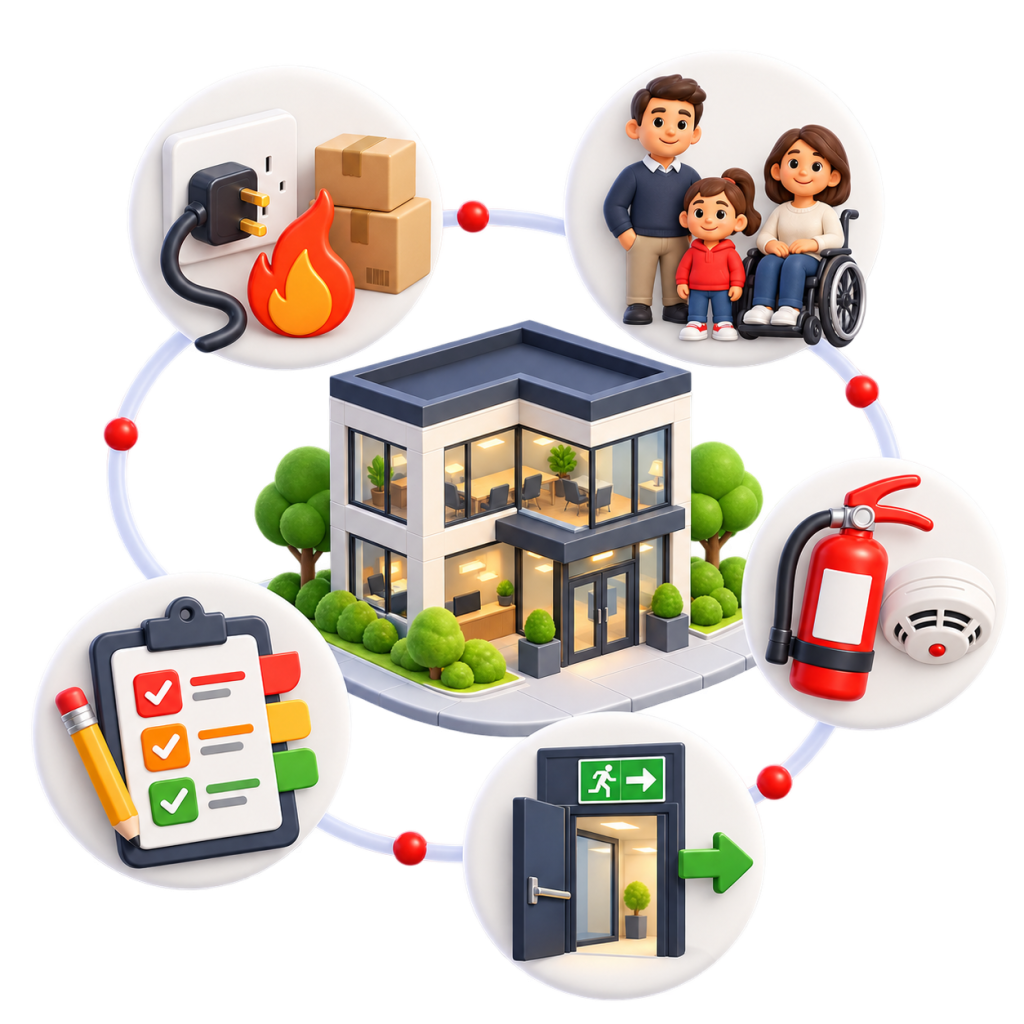
Offices, shops, restaurants, schools and warehouses with emergency escape lighting.
Shared corridors, stairs, landings and final exits.
Communal routes and areas where loss of lighting could hinder escape.
Inspection records to support property management and maintenance.
Checks matched to the installed system and the agreed inspection scope.
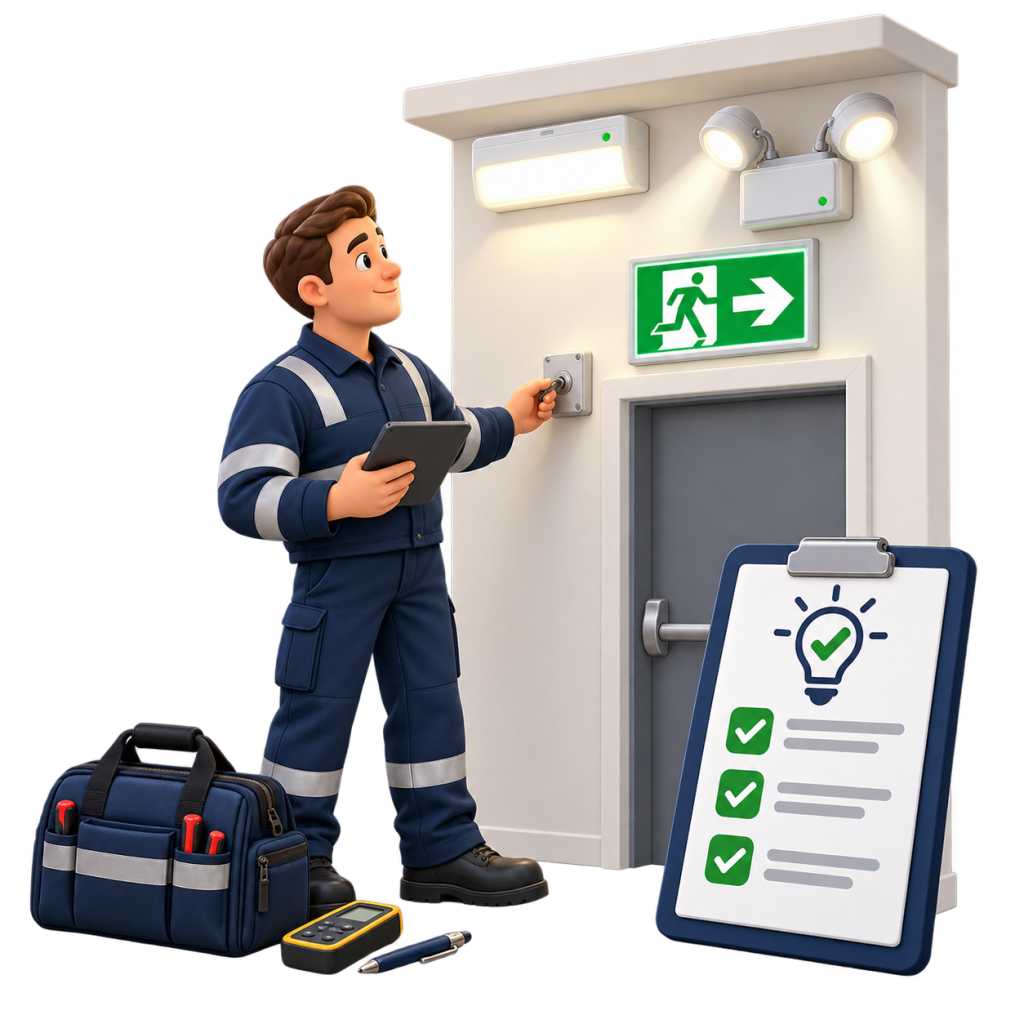
Check luminaires, exit signs and indicators for visible damage or poor condition.
Simulate normal supply failure and record units that fail to illuminate correctly.
Test operation for the system’s rated duration and identify weak batteries.
Review stairs, exits and key safety points. Illuminance measurements depend on the agreed scope.
Record defects, inspection results and the actions needed to address them.
Receive documentation that reflects the checks completed and their outcome.
Failed items are recorded clearly. Repairs and re-testing help close out outstanding defects.
Share the property type, number of fittings, access and previous records.
Carry out the agreed functional, duration or installation-related checks.
Identify failed fittings, batteries and other issues requiring attention.
Receive the relevant test record and clear next steps.
Keep routine testing current and review the system when circumstances change.
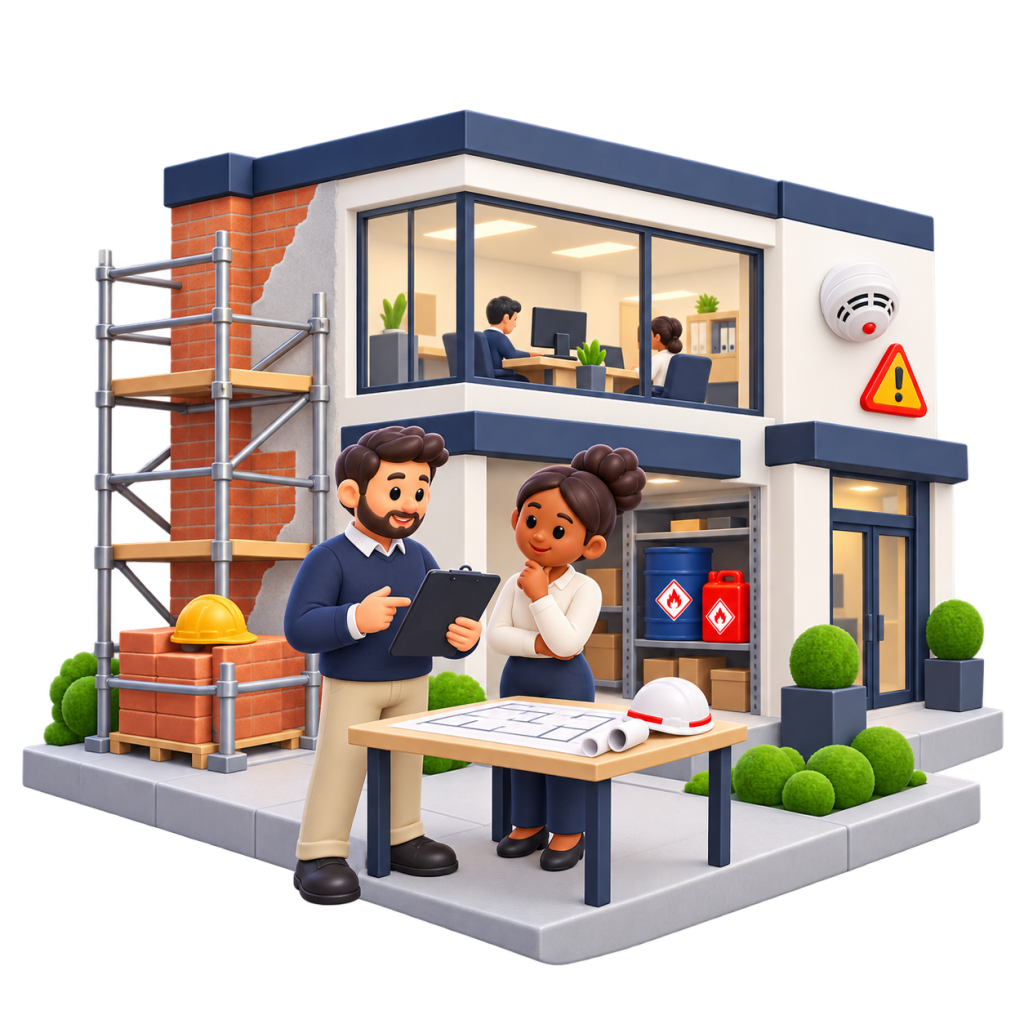
Testing should reflect the building layout, operating hours and emergency lighting system.
Shared escape routes need consideration of the layout, occupancy and property requirements.
Maintain a log of routine checks, duration tests, faults and repairs. A certificate does not replace ongoing maintenance.
Plan full-duration testing carefully so batteries have time to recharge before the system is needed.
Periodic test records cover the system inspected. New or altered installations need documentation appropriate to that work.
Agree the inspection scope, rated duration and any measurement requirements before booking.
Contact FRA Expert to arrange your property’s emergency lighting inspection and discuss the records you need.
The agreed inspection can cover visible condition, operation on simulated mains failure, rated-duration performance and recorded defects. Measurement requirements should be agreed in advance.
No. The test should match the system’s rated duration. The three-hour service shown in the pricing table applies where that duration is appropriate.
The fault is recorded clearly. Repair or replacement and any necessary re-test should be completed before the failed item is treated as satisfactory.
No. Continue routine testing, maintenance and fault reporting, keeping the results in a suitable system log.
Maintained lights operate during normal conditions and during a power failure. Non-maintained lights normally switch on when the normal supply fails.
New or altered systems need installation and commissioning documentation appropriate to the work completed. Existing areas may need separate assessment.