
Fire Risk
Assessment
London
Clear, practical fire safety assessments for London landlords, businesses and property managers. Understand the risks. Plan your next steps.
Clear pricing for your property
Competitive rates for comprehensive assessments. Residential FRA for studios, flats, houses and HMOs across every London borough.
Built around your property
Businesses & workplaces
Offices, shops, restaurants, schools, clinics and warehouses.
HMOs & shared homes
Shared kitchens, corridors, stairs and communal escape routes.
Blocks & mixed-use buildings
Relevant common parts and the building’s fire safety arrangements.
Owners & managing agents
Practical guidance for people responsible for the premises.
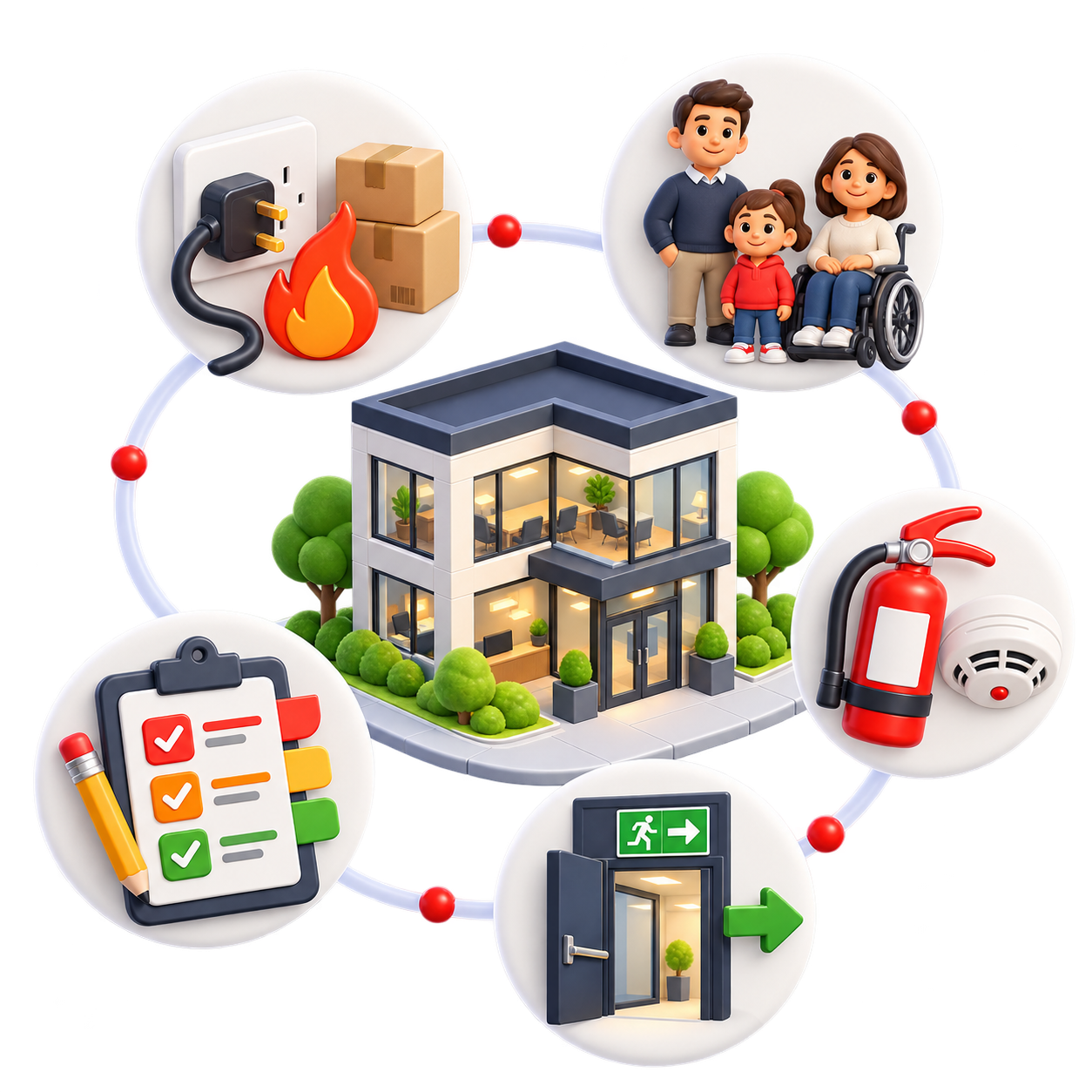
A closer look at your fire safety
Five connected areas. One assessment shaped around your building and the people who use it.
Fire hazards
Electrical equipment, heating, cooking, smoking and hot work, alongside combustible materials, storage and housekeeping.
People at risk
Visitors, lone workers, children, older people and anyone who may need help to evacuate.
Fire protection
Alarms, detection, emergency lighting, fire doors, compartmentation, equipment, signage and maintenance.
Safe escape
Escape routes, exits, obstructions and emergency arrangements suited to the building and its occupants.
Prioritised actions
Written findings that help you plan improvements, brief contractors and maintain a clear record.
Your findings. Your priorities. Your next steps.
Plain-English findings explain the hazards, people at risk, existing precautions and improvements needed.
Use the action plan to manage remedial work and keep your fire safety arrangements under review.
What your documentation covers
- Recorded findings and fire safety arrangements
- Actions set out in a clear order of priority
- Information to support emergency planning
- A working record for ongoing review
Property-specific. Practical. Clear.
- Recommendations matched to the premises and its use.
- Plain-English findings with clear priorities.
- Guidance you can use to plan improvements and brief contractors.
From enquiry to action
Tell us about the property
Share the building’s use and the scope of assessment needed.
On-site inspection
Review hazards, people at risk, escape routes and protection measures.
Risk evaluation
Consider existing precautions and relevant management controls.
Report & action plan
Receive written findings and practical, prioritised recommendations.
When should you review your assessment?
Keep it under regular review and revise it when significant changes affect the risks.
- Building alterations or refurbishment
- Changes in occupancy, use or equipment
- Changes in hazardous materials
- Failed fire precautions, a fire or near miss
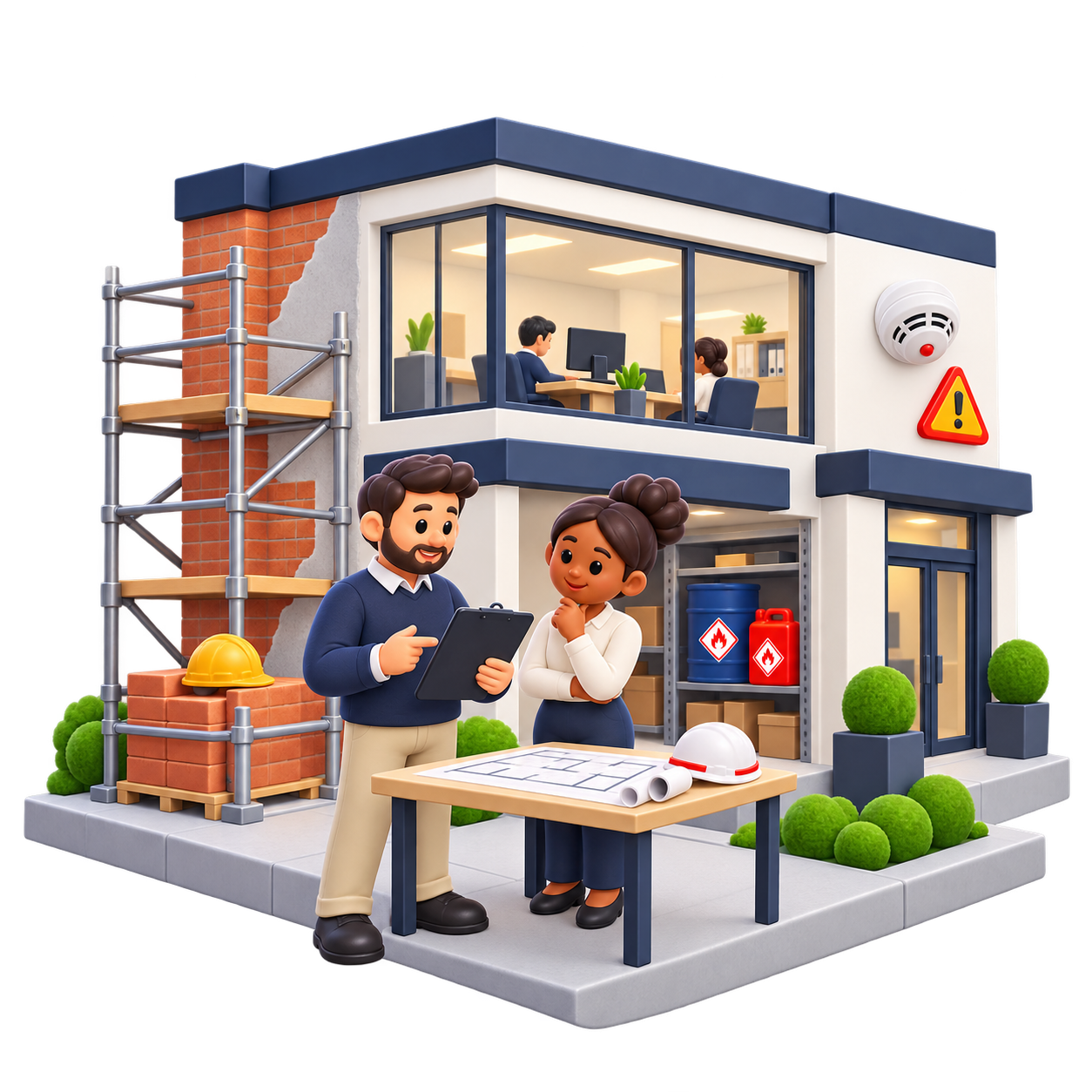
Different premises. Different risks.
Commercial premises
Offices, shops, restaurants, workshops and warehouses each bring different hazards, occupancy patterns and evacuation challenges.
- Staff, visitor numbers and higher-risk activities
- Electrical and cooking equipment, storage and work processes
- Emergency procedures, training and maintenance records
HMOs & shared residential buildings
The scope reflects shared kitchens, corridors and stairs, occupancy, escape routes and management arrangements.
- Fire doors, alarms and communal escape routes
- Structure, external walls and flat entrance doors where the Fire Safety Order applies
- Housing standards, management regulations and local licensing duties
Know your responsibilities
Under the Regulatory Reform (Fire Safety) Order 2005, the Responsible Person must arrange a suitable and sufficient assessment, record it in full, maintain precautions and keep it under review.
Duties can apply to employers, owners, landlords, occupiers and others with control of premises, including relevant residential common parts and paying-guest accommodation. Where responsibility is shared, people must co-operate and co-ordinate.
Choose for competence and clarity
Look beyond the headline price. Ask about the inspection scope, assessor competence, documentation and how actions will be prioritised.
FRA Expert focuses on clear communication and practical findings matched to the actual risks.
Book your London fire risk assessment
Need a new assessment or a review of your existing arrangements? Contact FRA Expert to arrange your site visit.
Frequently Asked
Questions
Is a fire risk assessment a legal requirement in London?
Yes. In most non-domestic premises the Responsible Person must ensure a suitable and sufficient assessment is carried out and kept under review. The Fire Safety Order also applies to relevant common parts of multi-occupied residential buildings. Exact duties depend on the premises and its use.
Who is the Responsible Person for fire safety?
The Responsible Person may be an employer, owner, landlord, occupier, facilities manager, managing agent or another person with control of the premises. More than one person can share duties, in which case they must co-operate and co-ordinate.
How often should a fire risk assessment be renewed?
The law does not set one renewal period for every premises. It must be reviewed regularly and revised when it may no longer be valid or after a significant change, such as refurbishment, changed occupancy, new work processes, or a fire or near miss.
What should be included in a fire risk assessment report?
A report should record fire hazards, people at risk, existing precautions, evaluation of risk and actions needed to improve safety. It should also support emergency planning and provide a clear record for ongoing review.
Do HMOs need a fire risk assessment?
Fire safety duties apply to relevant common parts of HMOs and other multi-occupied residential buildings, while housing and licensing duties may also apply. The correct scope depends on the layout, management arrangements and local requirements.
Can I carry out the assessment myself?
For simple premises, a Responsible Person may do so if they have enough knowledge and competence. For larger, higher-risk or complex buildings, appointing a competent fire risk assessor is usually more practical. The Responsible Person still retains legal responsibility for compliance.