
A clear quotation for your premises
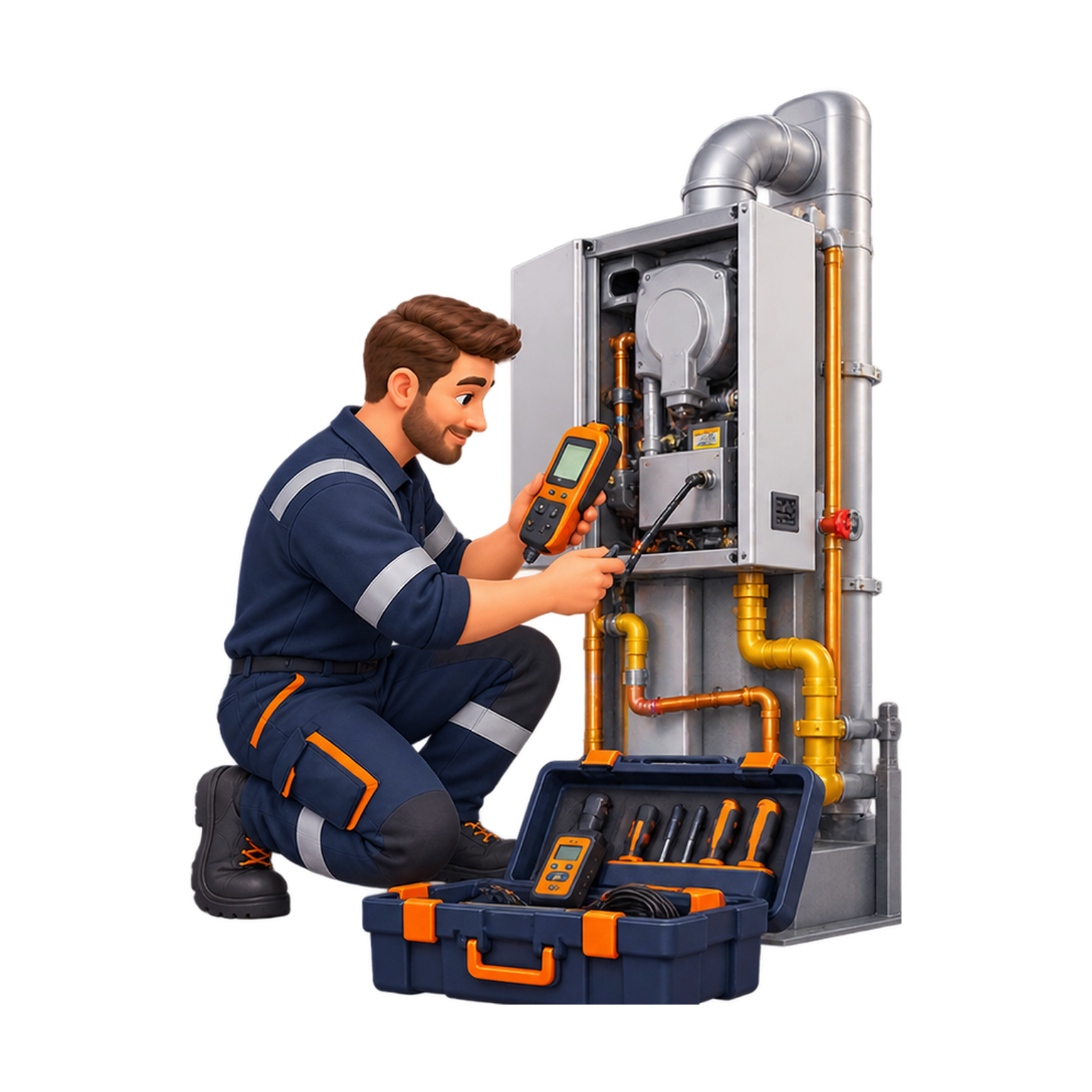
Tell us your appliance count, equipment type, fuel and access requirements. Confirm the inspection scope and total price, including VAT and any applicable extras, before booking.
Built around your business
Restaurants & takeaways
Checks planned around commercial catering equipment, fuel type, ventilation and kitchen access.
Cafés, hotels & kitchens
Inspection scope matched to the appliances in use and the relevant commercial catering competencies.
Offices & retail premises
Gas safety checks for equipment within the agreed scope, including relevant heating and hot-water systems.
Landlords & property managers
Records for commercial gas equipment under your control, including shared plant where responsibility is retained.
What the inspection covers
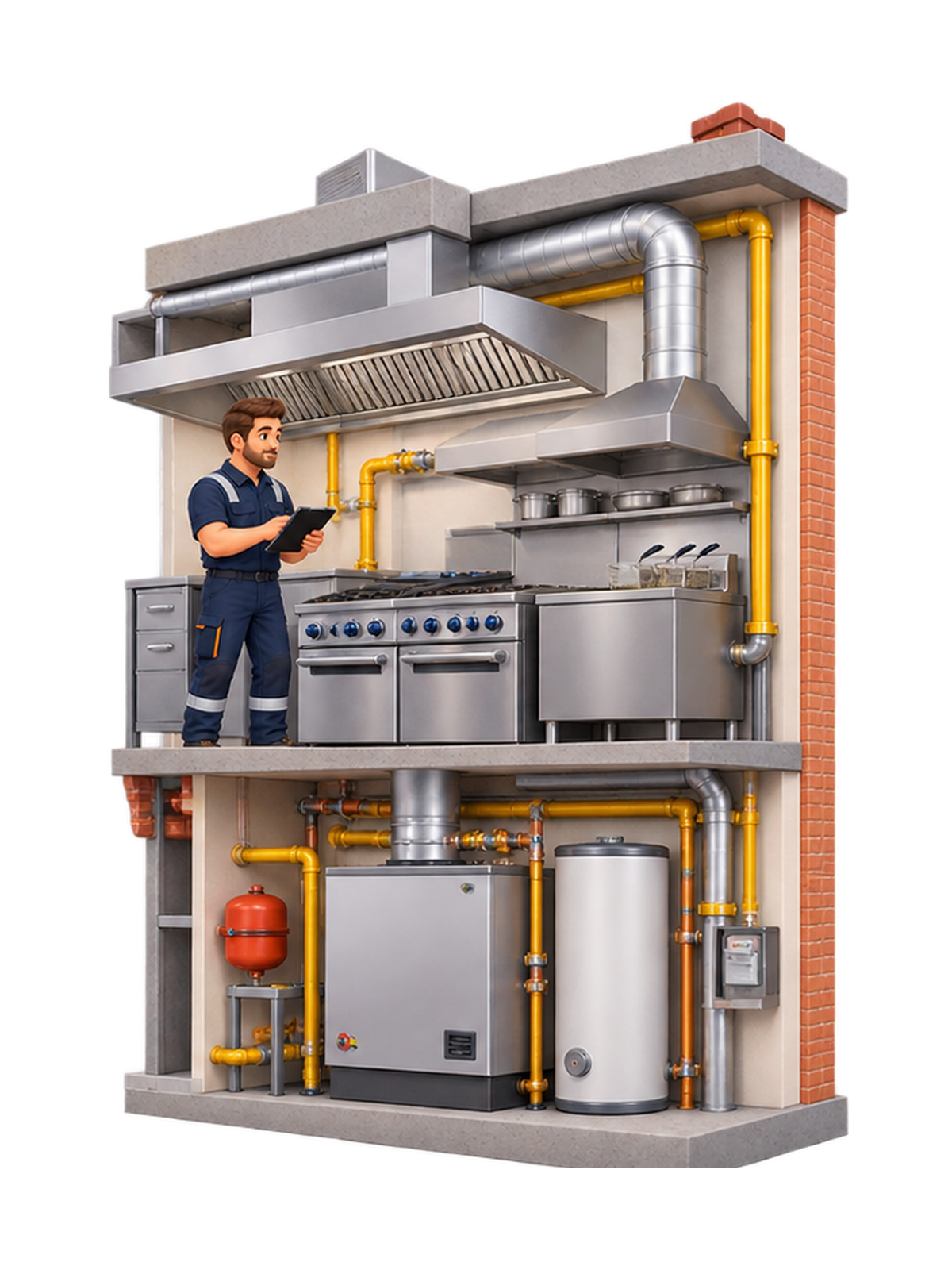
The checks depend on the premises, appliances and fuel. The engineer’s registered work categories must cover the equipment and tasks involved.
Appliance condition & operation
Check the condition and operation of appliances in scope, such as boilers, water heaters and commercial catering equipment.
Pipework & gas tightness
Assess relevant installation pipework and tightness where appropriate. Specialist pipework may require separate competence.
Flues & combustion
Assess relevant flues and combustion performance, including the safe removal of combustion products.
Ventilation & extraction
Review ventilation provision and, in commercial kitchens, its interaction with gas equipment and mechanical extraction.
Clear findings.
A useful safety record.
The certificate records the equipment inspected, findings and action taken or recommended. It should not imply that untested equipment has been approved.
Keep it with servicing and repair records. Where defects are found, arrange the required action and retain evidence of completed repairs.
What your record covers
- Premises and equipment inspected
- Engineer or registered business details and inspection date
- Relevant findings and identified defects
- Action taken or recommended
Defined scope. Clear responsibilities.
- Inspection scope matched to the actual equipment.
- Relevant commercial and fuel competence.
- Records that support maintenance and remedial action.
From enquiry to inspection record
Confirm the scope
Share the premises type, appliances, fuel and access needs so the required competence can be matched.
Inspect the equipment
The engineer carries out relevant appliance, installation and safety checks within the agreed scope.
Explain the findings
Review any defects and necessary action. Unsafe equipment may need isolation or to remain out of use.
Record & follow up
Retain the inspection record, arrange remedial work and keep repair evidence with your maintenance files.
Plan checks around equipment and use
Inspection timing varies with the installation and how it is used. Follow manufacturer guidance and review the maintenance needs of your equipment.
- Manufacturer inspection and maintenance instructions
- Equipment use and operating conditions
- Previous defects and inspection findings
- Changes to equipment or the installation

Different premises.
Different considerations.
Commercial catering
Long operating hours, heat, grease and ventilation needs make maintenance especially important in restaurants, cafés, takeaways and commercial kitchens.
- Confirm the correct catering and fuel competencies
- Include relevant ventilation and interlock checks
- Plan equipment access around business operations
Managed & mixed-use property
Check who controls each gas system. Landlords, commercial tenants and facilities teams may have responsibility for different equipment or areas.
- Review lease and equipment-control arrangements
- Identify responsibility for shared plant and boilers
- Keep residential and commercial duties distinct
Know your responsibilities
A certificate records the checks completed. Safe gas systems also depend on suitable maintenance, competent engineers and action on defects.
Review the lease and management arrangements to identify responsibilities. Keep inspection, servicing and repair records together, particularly where systems are shared.
Choose the right competence
Gas Safe registration covers specific work categories. Check the engineer’s ID card for the relevant commercial equipment, fuel and type of work.
FRA Expert matches the work to the required competence and focuses on a clear inspection scope, accurate records and practical explanations.
Book your commercial
gas safety inspection
Discuss your London premises, appliance count, fuel and access requirements with FRA Expert to arrange the appropriate inspection.
Frequently Asked
Questions
What is a commercial gas safety certificate?
It is a written record of checks on commercial gas equipment within an agreed scope. It identifies what was inspected, the findings and any action taken or recommended.
What is a CP42 certificate?
CP42 commonly describes a commercial catering gas safety record. The engineer must hold the relevant commercial catering and fuel competencies for the work.
How often should commercial gas equipment be checked?
There is no single interval for every commercial installation. Follow manufacturer guidance and consider equipment use, condition and previous findings when planning inspection and maintenance.
Who can carry out the inspection?
A Gas Safe registered engineer with the correct commercial work categories for the equipment, fuel and tasks involved. Domestic-only qualifications may not cover commercial systems.
Who is responsible in a commercially rented property?
Responsibility depends on control of the premises and equipment, the lease and management arrangements. Identify which systems the landlord and tenant each control, including any shared plant.
Is a gas safety inspection the same as a service?
No. A safety inspection checks the equipment within the agreed scope. Servicing involves maintenance tasks required by the manufacturer or equipment condition. An effective maintenance programme may need both.