
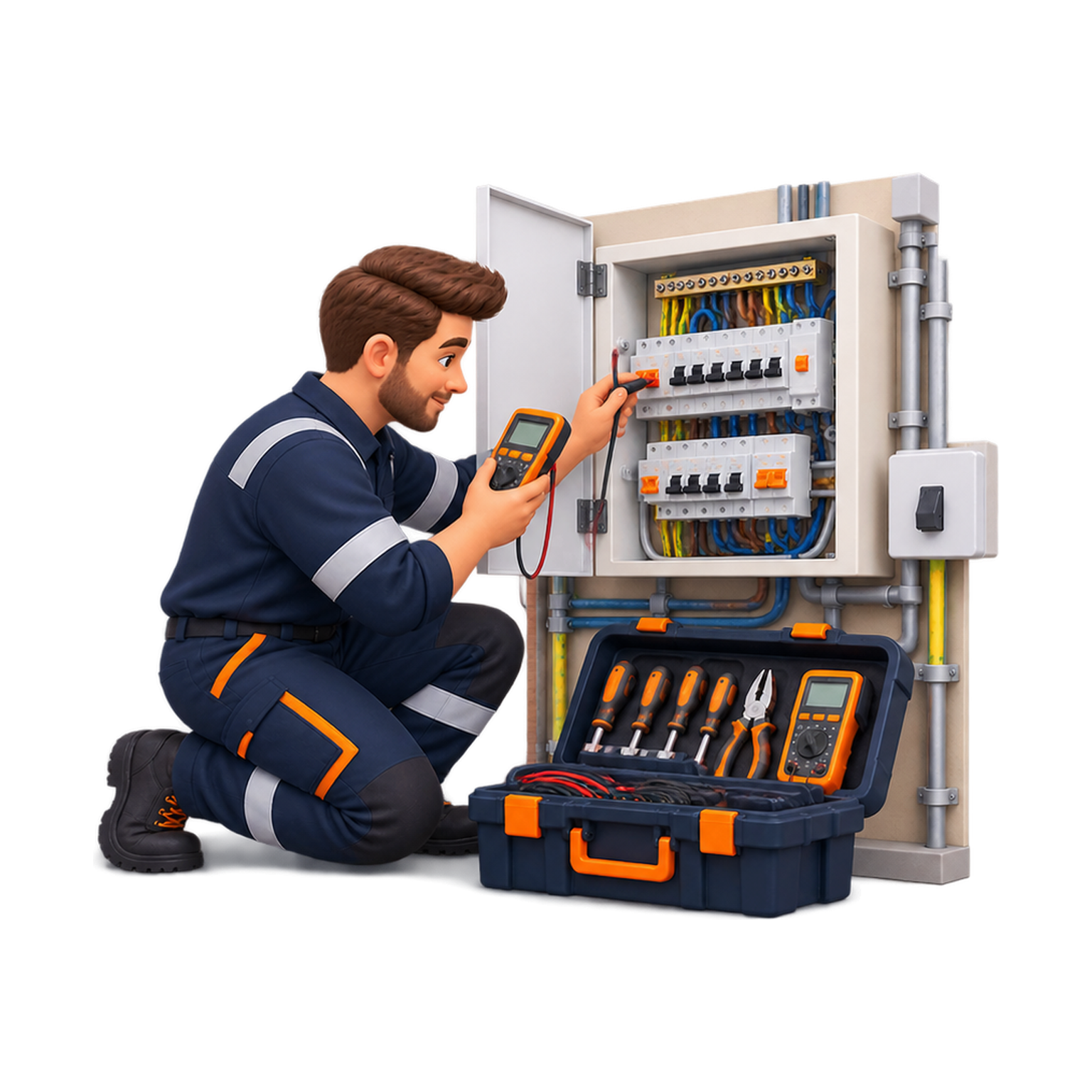
Clear diagnostic pricing
The diagnostic call-out includes the first hour of investigation. Additional time, remedial repairs and diagnostics with an EICR are quoted separately.
Built around your property
Homeowners
Investigate repeated trips, flickering lights, dead sockets and unexplained power loss in your home.
Landlords & letting agents
Trace tenant-reported faults and keep a clear record of findings and recommended repairs.
Businesses & workplaces
Fault finding for offices, shops, restaurants and other managed premises, planned around operations.
Facilities & property managers
Targeted investigation and practical findings to support maintenance files and repair decisions.
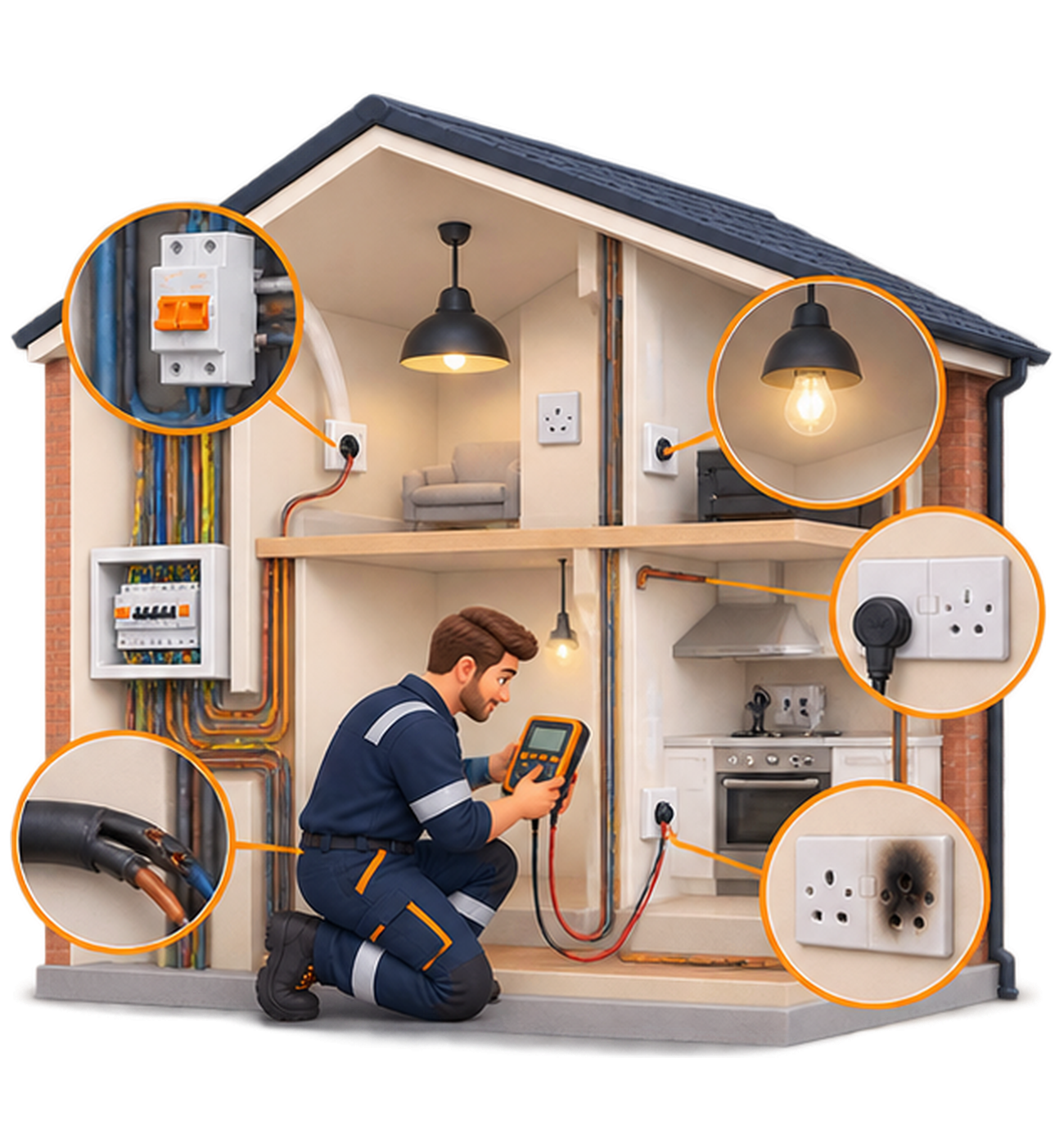
A closer look at the fault
Testing follows the symptoms and affected circuits. The electrician selects appropriate checks rather than applying every test to every property.
Tripping protection
Investigate breakers, RCDs or RCBOs that keep tripping, considering circuit faults, faulty appliances and protective devices.
Flickering & power loss
Trace intermittent lighting faults, supply variations and connection problems affecting the installation.
Dead sockets & circuits
Check affected accessories and trace relevant circuits for failed connections, damaged conductors or other faults.
Heat, buzzing & damage
Examine accessible wiring and accessories for overheating, damaged insulation, water ingress and poor connections.
Targeted electrical tests
Where appropriate, use continuity, insulation resistance, voltage, earth fault loop or protective-device tests to investigate the cause.
Your findings.
Your next steps.
FRA Expert explains the findings and recommended action in plain English. A written diagnostic findings record can be provided where requested.
This records targeted fault finding, not a full periodic assessment. If an intermittent fault remains unresolved, the record should state the limits and further investigation needed.
What a findings record covers
- Property, reported fault and area investigated
- Relevant observations and tests completed
- Investigation outcome and any limitations
- Repairs or further work recommended
Focused tests. Practical next steps.
- Investigation focused on the reported electrical problem.
- Testing selected to suit the affected installation.
- Clear explanations to support informed repair decisions.
From symptoms to a repair plan
Review the symptoms
Discuss when the fault began, how often it occurs, affected areas and recent changes.
Visual examination
Check accessible wiring, the consumer unit and relevant accessories for visible concerns.
Targeted tests
Apply suitable checks to the affected circuits and agree any necessary power isolation.
Findings & next steps
Explain the likely cause. Agree practical minor repairs or quote separately for larger work.
When should you book diagnostics?
Arrange an investigation when symptoms repeat or a circuit cannot be restored safely. Tell the electrician what happens and when.
- Repeated breaker, RCD or RCBO trips
- Flickering lights, dead sockets or partial power loss
- Unusual heat, buzzing or burning smells
- Water ingress, cable damage or an electrical incident

Different premises.
Careful planning.
Homes & rented properties
Coordinate access with residents and discuss power interruptions before testing. A diagnostic record supports maintenance decisions but does not replace a required EICR.
- Share tenant reports and previous electrical records
- Agree access and temporary power interruptions
- Keep diagnostic findings alongside maintenance records
Businesses & managed sites
Plan investigation around access and business operations. Identify equipment and circuits that could be affected by temporary isolation.
- Discuss IT, alarms and operational equipment
- Agree any circuit shutdowns before testing
- Request a written findings record for maintenance files
Why choose FRA Expert?
FRA Expert focuses on structured fault finding, proportionate testing and clear communication for homeowners, landlords, agents and businesses.
Findings help you decide whether a repair, further investigation or a separate formal inspection is appropriate. Larger repair work can be quoted before you authorise it.
Diagnostics or an EICR?
Diagnostics investigates a known or suspected problem. An EICR assesses the broader condition of an electrical installation for continued use.
A diagnostic findings record does not replace an EICR or the formal certification required for electrical work. Ask which service fits your situation.
Book Electric
Diagnostics in London
Tell FRA Expert about the symptoms, property type and any previous electrical reports so the diagnostic visit can be planned.
Frequently Asked
Questions
How is electrical diagnostics different from an EICR?
Diagnostics investigates a specific known or suspected fault. An EICR assesses the broader condition of an installation. A diagnostic visit does not replace an EICR where periodic inspection is required.
What happens during a diagnostic visit?
The electrician reviews the symptoms, examines accessible parts of the installation and carries out suitable tests on affected circuits or equipment. The checks depend on the fault.
Is a diagnostic findings record a formal electrical certificate?
It is a record of the fault investigated, observations, tests and recommended actions. It does not replace an EICR, Electrical Installation Certificate or Minor Works Certificate when those documents are required.
How long does electrical fault finding take?
Simple faults may be located quickly. Intermittent or multi-circuit problems can take longer, depending on access and whether the symptoms can be reproduced safely. Further investigation may be needed.
Can testing take place in an occupied property?
Yes, in many cases. Some tests require temporary power isolation. Agree shutdowns beforehand, especially where residents, IT equipment, alarms or business operations could be affected.
Can the fault be repaired during the visit?
Minor defects may be repairable during the visit where agreed and practical. Larger work can be quoted separately so you understand the scope before authorising repairs.