
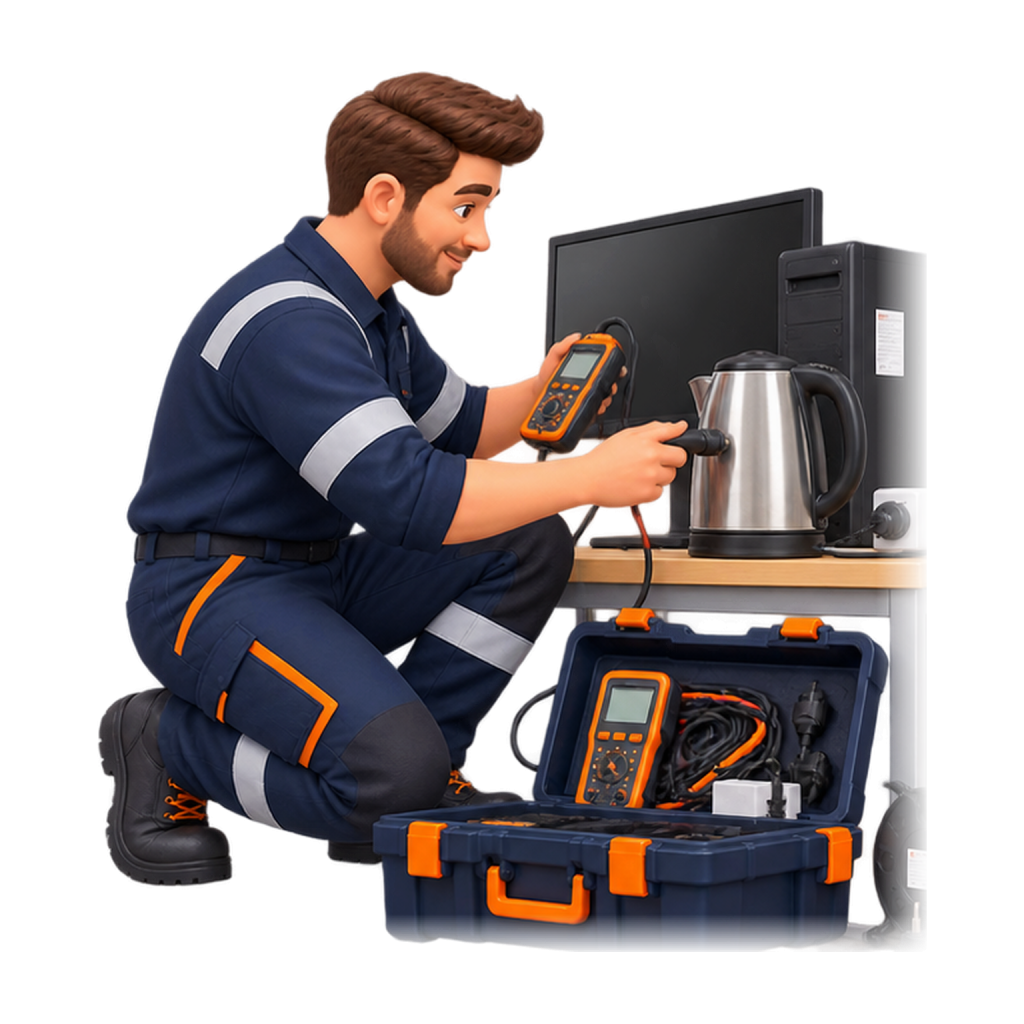
A clear quote for your appliances
Share your appliance count, equipment types and site requirements. Contact FRA Expert to confirm the scope and current price before booking.
Built around your equipment
Landlords & letting agents
Landlord-supplied appliances in furnished flats, houses and shared homes.
Offices & businesses
Computers, printers, kitchen appliances, heaters and extension leads.
Retail & hospitality
Appliance checks planned around equipment use and site operations.
Property & facilities managers
Clear appliance schedules to help track results, failures and review dates.
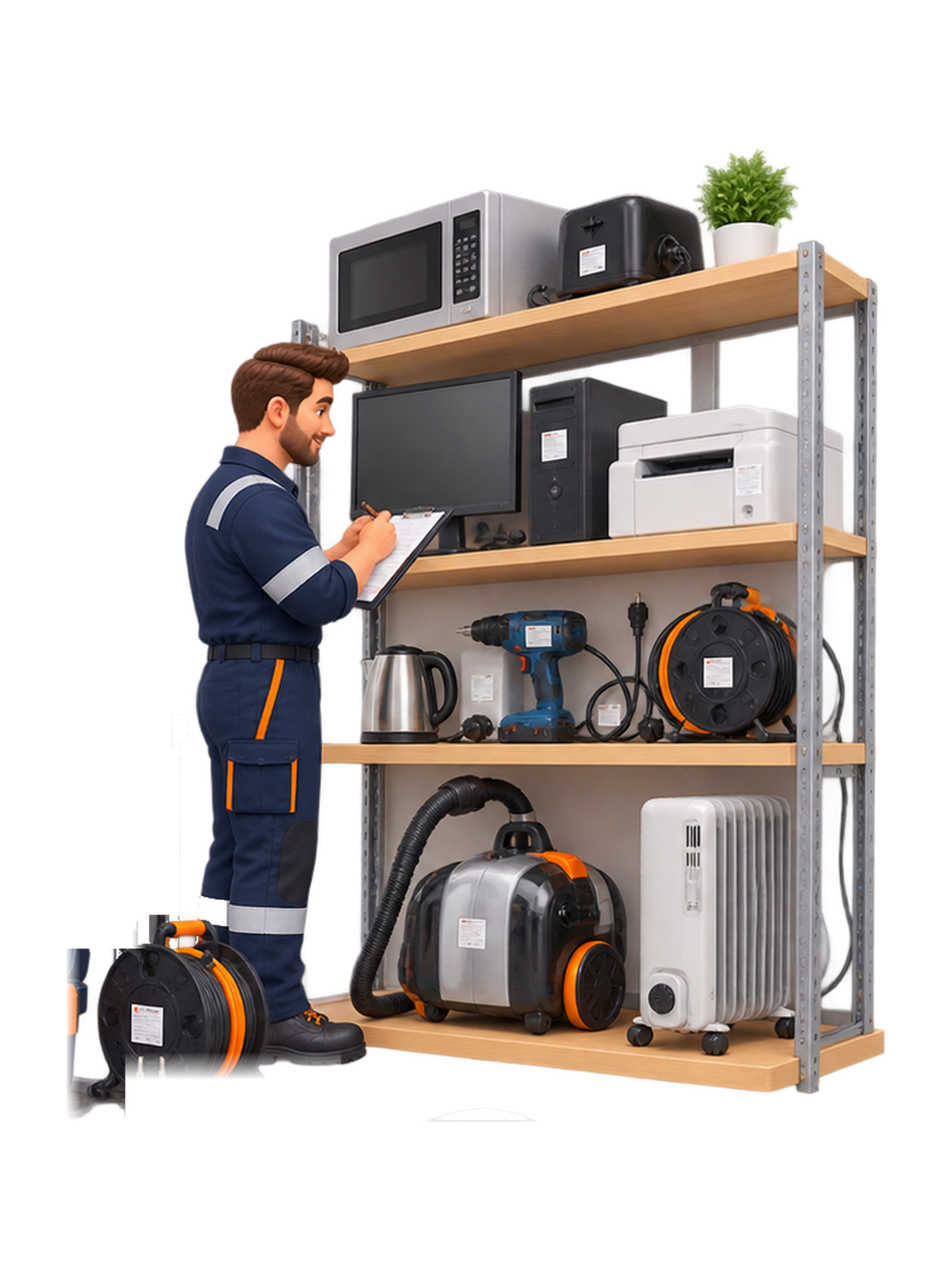
A closer look at appliance safety
PAT combines visual examination with electrical checks selected for the equipment. The method reflects its construction, condition and use.
Plugs & flexible cables
Checks for damaged insulation, exposed conductors, poor cable anchorage and unsuitable repairs.
Casings & visible condition
Examination for cracks, loose parts, signs of overheating and other visible damage.
Appropriate electrical checks
Checks may include earth continuity, insulation or polarity testing where appropriate to the appliance.
Results for each item
Clear inspection outcomes help identify equipment that needs attention or removal from use.
An appliance schedule
A written record of the equipment checked, results and relevant observations.
Your appliances. Your results. Your next steps.
Your PAT record identifies the equipment inspected or tested, with outcomes and any failed items or observations.
It records condition on the day. New damage still needs prompt attention, even if an item previously passed.
What your documentation covers
- Appliances and their location or asset reference
- Inspection and test results
- Failed items and relevant observations
- A record for maintenance and future review
Appropriate checks. Clear records.
- Visual inspection alongside suitable electrical checks.
- Clear outcomes for the appliances tested.
- Documentation to help manage failures and future checks.
From enquiry to results
Define the scope
Share your appliance count, property use and equipment types.
Visual inspection
Check plugs, flexes and casings for damage and visible defects.
Electrical checks
Apply suitable tests and assess the results for each equipment type.
Results & next steps
Receive an appliance record and identify failed items needing action.
When should appliances be checked?
Set review periods around equipment type, use, environment and previous results. A single interval does not suit every appliance.
- Frequent movement or heavy use
- Moisture, dust or harsh working conditions
- Public use or a history of faults
- Changes in condition, repairs or previous results

Different premises. Different equipment.
Workplaces & commercial premises
A clean, dry office presents different risks from a busy kitchen or workshop. Plan the scope around how equipment is used.
- Computers, printers and extension leads
- Kitchen appliances, cleaning equipment and heaters
- Power tools and specialist equipment within the agreed scope
Furnished homes & managed properties
Keep track of landlord-supplied appliances and their condition. Clear records support tenancy handovers and ongoing maintenance.
- Kettles, microwaves and washing machines
- Lamps, televisions and other supplied equipment
- Review after appliance changes, repairs or heavy use
Act on failed appliances
Equipment with a serious defect should be removed from normal use until it is repaired, replaced or otherwise made safe.
Damaged flexes, exposed conductors, cracked plugs and overheating need prompt action. After repair, re-inspection or testing may be needed before reuse.
Choose FRA Expert
A defined scope, appropriate on-site checks and clear documentation for London landlords, businesses and property managers.
Discuss your appliance inventory and operations so the visit can be planned around your property.
Book your London PAT testing
Tell FRA Expert about your property, appliance count and preferred appointment. Confirm your scope and quotation before booking.
Frequently Asked
Questions
What is PAT testing?
PAT is in-service inspection and testing of electrical equipment. It combines visual examination with appropriate electrical checks to assess continued safe use.
What equipment can be included?
Typical items include kettles, microwaves, washing machines, lamps, televisions, computers, printers, extension leads, portable heaters, vacuum cleaners and power tools. Confirm the exact scope before the visit.
What does a PAT testing certificate record?
It identifies the appliances inspected or tested, the outcomes and relevant observations or failures. It records the condition found at the time of inspection.
How often should appliances be checked?
Frequency should reflect the equipment, its use, the environment and previous results. Heavy use, frequent movement and a history of faults may call for closer attention.
What happens if an appliance fails?
A failed appliance should not simply return to normal use. It may need repair by a competent person, replacement or removal from service. Re-inspection or testing may be needed after repair.
Can an appliance pass an electrical test but still be unsafe?
Yes. A machine test may miss a cracked casing, damaged plug or unsuitable repair. The overall decision considers visual condition as well as appropriate electrical test results.