
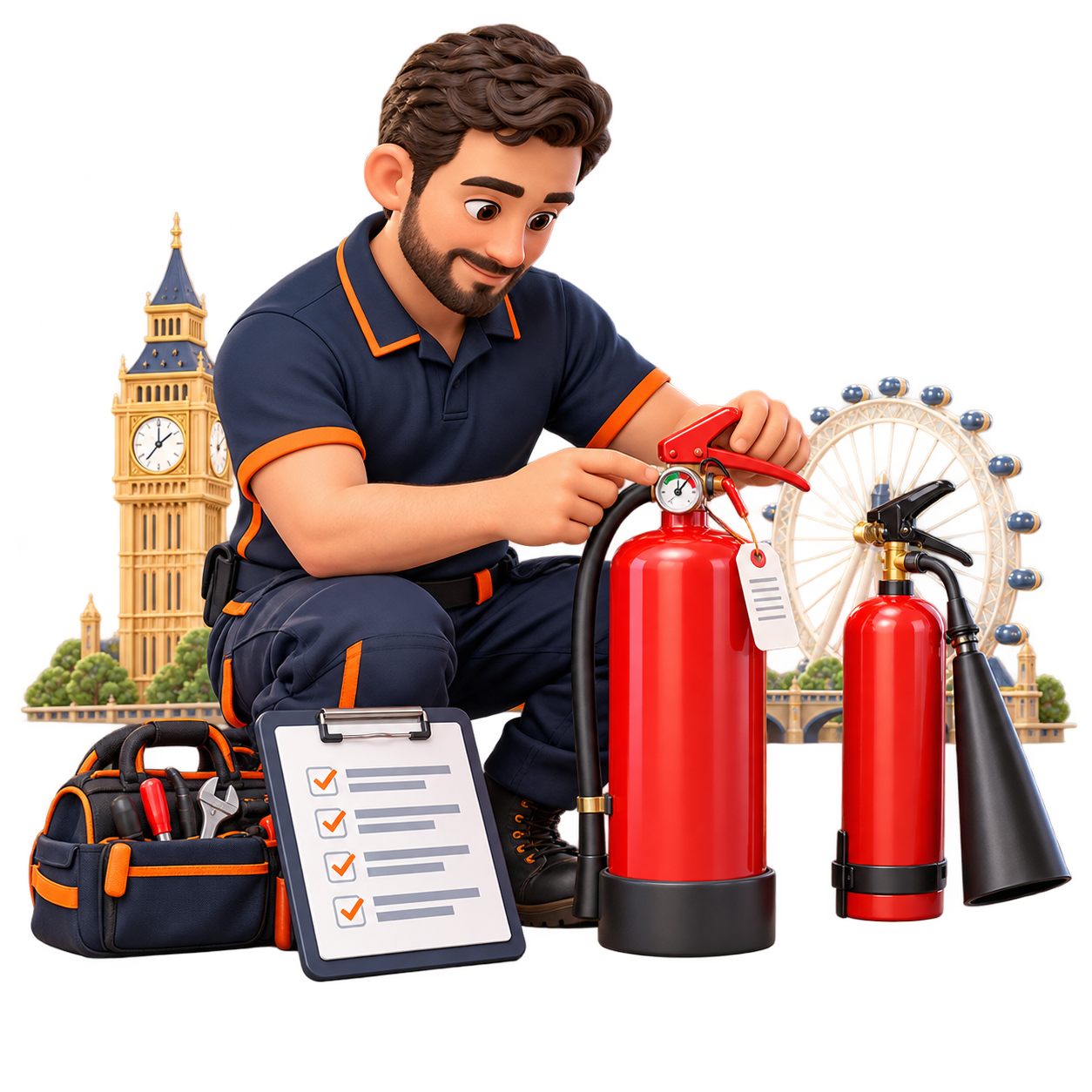
A clear quote for your extinguishers
Tell us the number and type of units, property use and previous service details so the visit and quotation reflect the work needed.
Checks matched to your premises
Businesses and workplaces
Offices, shops and other workplaces with portable extinguishers forming part of their fire precautions.
HMOs and managed blocks
Relevant shared and common areas, with provision guided by the building’s fire risk assessment.
Hospitality and specialist sites
Kitchens, workshops, warehouses and mixed-use premises with different hazards and equipment needs.
Landlords and property teams
Practical findings and records for people managing extinguisher condition, access and maintenance.
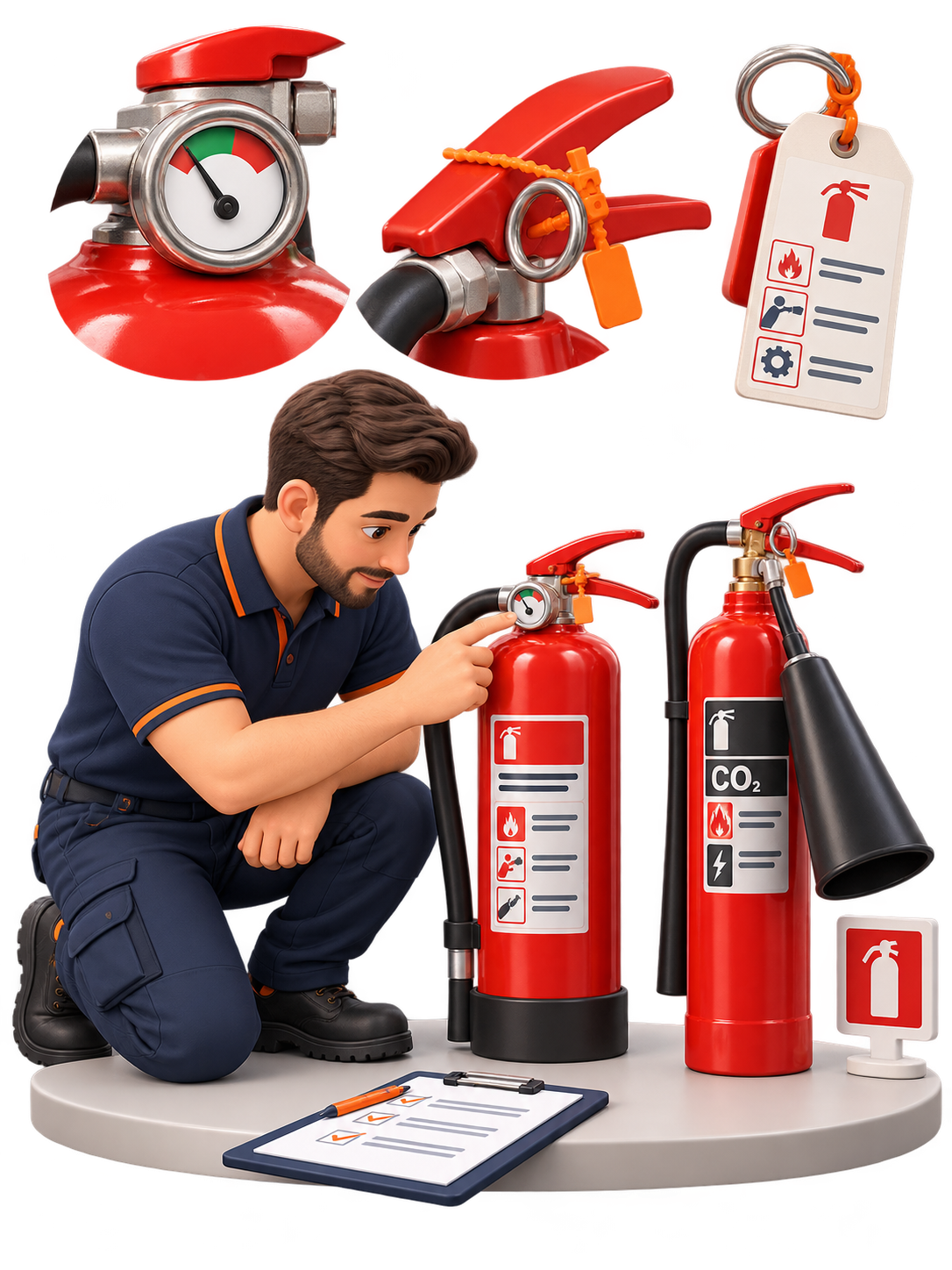
A closer look at extinguisher readiness
The visit considers each unit’s condition, location and maintenance information within the agreed scope.
Location, access and signage
Check units are in their expected positions, unobstructed and easy to identify where required.
Body and pressure indication
Look for corrosion, dents, leakage and damage, checking pressure indicators where fitted.
Pin, seal and discharge parts
Check safety pins, tamper seals, hoses, horns and nozzles for missing, damaged or blocked components.
Labels and instructions
Review whether operating instructions and maintenance information remain legible.
Type and identified risk
Highlight obvious mismatches between equipment and hazards, with overall provision guided by the fire risk assessment.
Clear findings. Useful service records.
The service record identifies the units checked, their condition, work completed and any defects or recommendations.
Keep the report with premises maintenance records. A service label or report does not replace the building’s fire risk assessment.
What your service record covers
- Extinguisher identification and location
- Service date and equipment condition
- Maintenance completed
- Defects and recommended actions
Condition. Access. Clear next steps.
- Checks focused on condition, suitability and access.
- Defects explained with practical recommendations.
- Records that support ongoing premises management.
From enquiry to service record
Share the site details
Tell us the premises type, extinguisher count, access arrangements and previous service details.
Inspect the equipment
Review location, accessibility, physical condition, operating parts and maintenance information.
Explain any defects
Identify units needing corrective work, further maintenance, recharge or replacement.
Record the findings
Document condition, completed maintenance and recommended actions for the premises records.
When should you arrange a check?
Plan professional maintenance around the equipment’s service requirements and act when a unit’s condition or availability changes.
- Equipment approaching its service date
- Units that have been moved or access blocked
- Visible damage, leakage or broken seals
- Discharged units or signs of previous use
Different premises. Different equipment needs.
Workplaces and specialist hazards
Offices, shops, kitchens, workshops and warehouses can present different fire risks. Equipment selection should follow the fire risk assessment.
- Review the hazards and equipment provision together
- Consider cooking, electrical and stored-material risks
- Keep extinguisher locations accessible and clearly identified
Shared and managed residential areas
Consider the building’s shared areas and identified fire precautions. Do not assume every private dwelling needs the same extinguisher provision.
- Check provision against the building’s assessment
- Monitor equipment in relevant shared or common areas
- Record faults and arrange appropriate corrective action
Keep routine checks and records clear
Routine visual checks help confirm that units remain present, accessible and apparently undamaged between professional services.
Record checks and act on faults. A check sheet supports ongoing monitoring but does not replace maintenance by a competent person.
Why choose FRA Expert?
FRA Expert focuses on a clear scope, competent inspection and useful records for landlords, businesses and facilities teams.
Where equipment is defective or appears unsuitable for the identified risk, the issue and recommended next steps are explained.
Book your London extinguisher checks
Contact FRA Expert with your property type, extinguisher count and previous service details to arrange the appropriate visit.
Frequently Asked
Questions
What do fire extinguisher checks cover?
The scope can include location, access, physical condition, pressure indication where fitted, pins, seals, hoses or nozzles, instructions and service records. It can also highlight an obvious mismatch with the identified fire risk.
How do visual checks differ from professional servicing?
Routine visual checks look for missing, obstructed, damaged or apparently used units. Professional servicing involves a more structured inspection and the maintenance actions relevant to the extinguisher.
What should an extinguisher check sheet record?
Record the location, type or asset number, check date, accessibility, visible condition, pin and seal status, pressure indication where applicable and any action needed.
What happens if a unit is damaged or discharged?
Treat it as unavailable until a competent person confirms the required maintenance, recharge or replacement. The service record should identify the defect and recommended action.
Does the service report replace a fire risk assessment?
No. The report records extinguisher inspection and maintenance. The wider fire risk assessment guides the equipment needed for the premises and its hazards.
What information do you need before booking?
Share the property type, number and types of extinguishers, previous service details and access arrangements. Mention any damage, discharge or other known defects so the scope can be discussed.